YO Analog
Overview
Description
The YO Analog is designed to measure AC current in devices connected to the electricity grid, supporting simultaneous measurements across setups such as two three-phase, six single-phase, or a combination of one three-phase and three single-phase devices. Its current clamps can be installed without determining the current flow direction, simplifying deployment. Wireless communication eliminates the need for additional wiring or modifications to existing systems. Leveraging a proprietary algorithm from the Yosensi Team, the device achieves precise mapping of current and power consumption, even within the constraints of LoRaWAN data transfer.
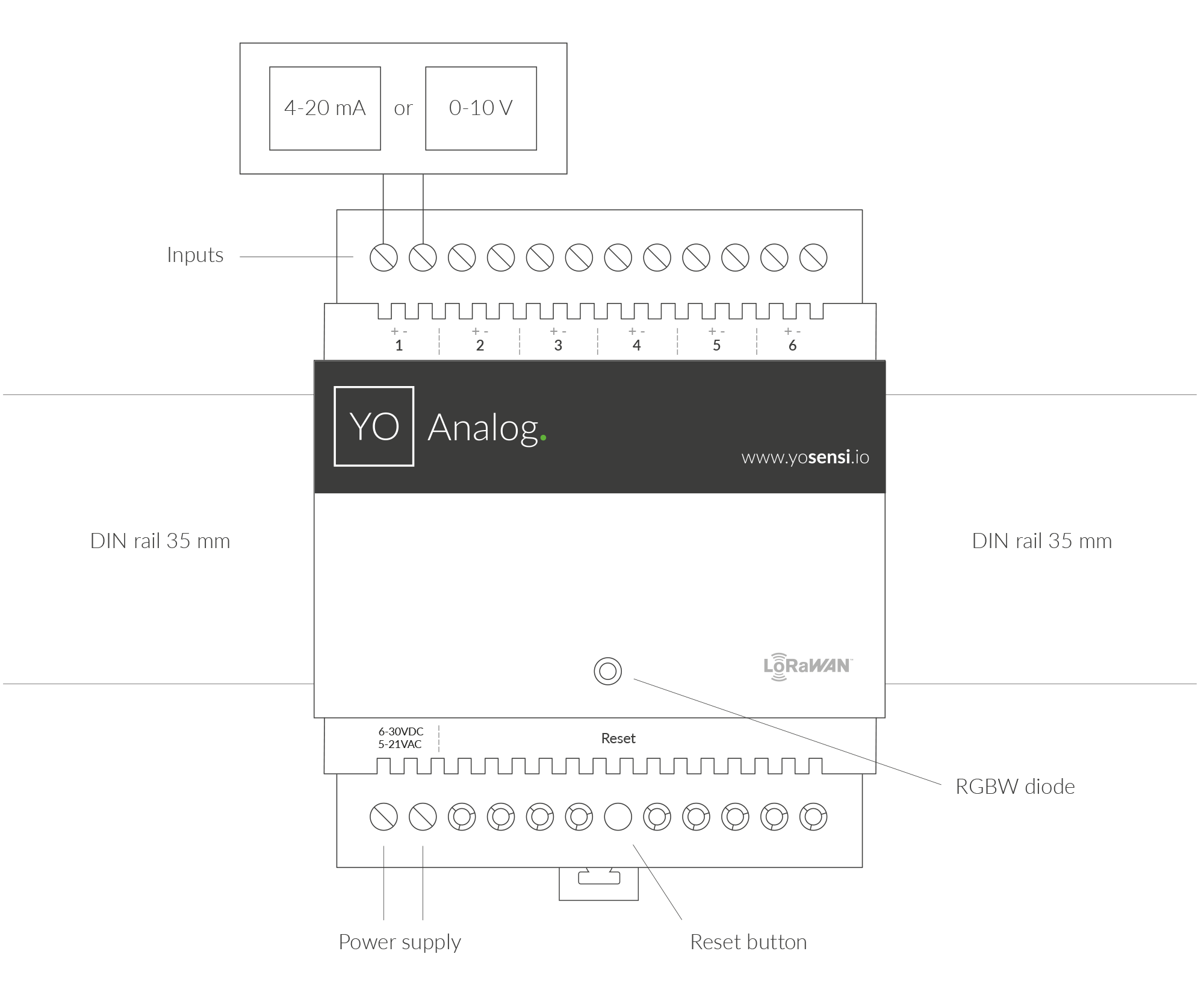
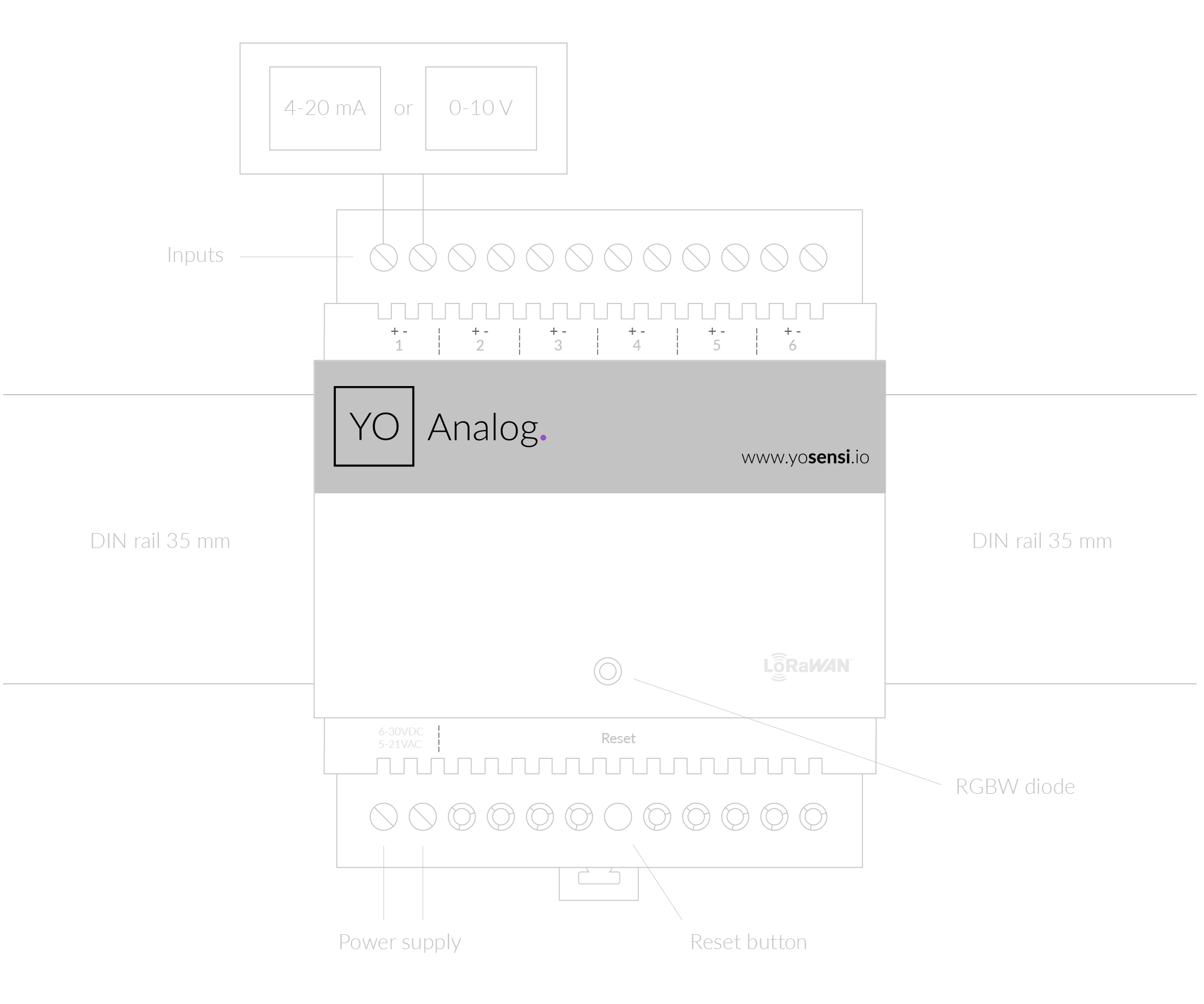
Figure 1. Device top view
Device sticker placed on the right side of the device enclosure contains information about model, version, LoRaWAN region and 3 parameters important in case of device identification and configuration:
- DEV EUI: 64-bit unique device identifier in a LoRaWAN network,
- DEV ADDR: address required to connect via ABP activation type to LoRaWAN,
- BLE MAC: Bluetooth physical address.
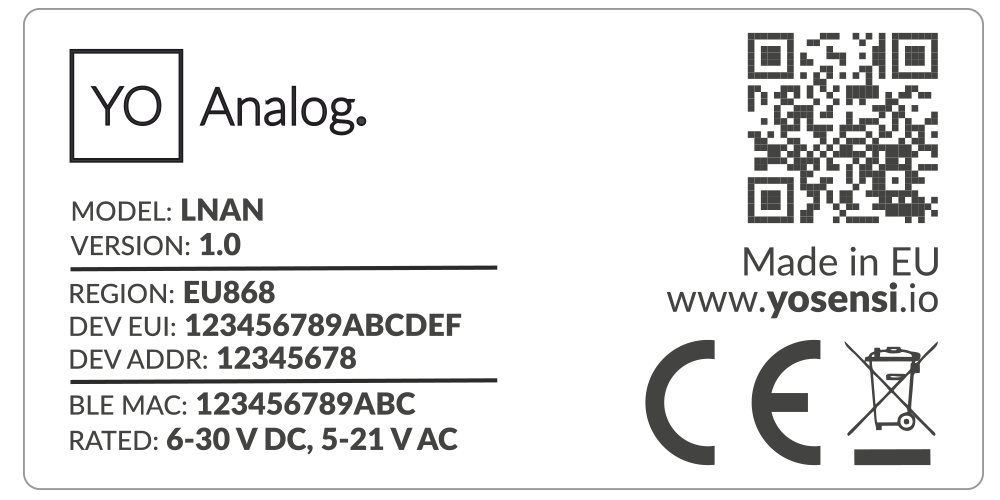
Figure 2. Device sticker
Features
- LoRaWAN Technology: Available in multiple versions with LoRa radio configured for various regions and ISM frequency bands (e.g., EU868, US915, AU915), it is compatible with both private and public LoRaWAN networks and supports connections via ABP (Activation by Personalization) or OTAA (Over-The-Air Activation).
- Bluetooth Low Energy (BLE): Enables easy configuration through a user-friendly JSON data exchange format, supports firmware updates via OTA (Over-the-Air), and boasts very low energy consumption.
- Current: Measured current flow in the 4-20 mA range, a standard used in many industries, enabling customers to monitor signals in industrial networks connected to IoT devices, with YO Analog capable of monitoring up to 6 signals depending on configuration.
- Voltage: Measured in the 0-10 V range, a standard used in many industries, allowing customers to monitor control signals in industrial networks connected to IoT devices, with YO Analog capable of monitoring up to 6 signals depending on configuration.
- Yosensi Management Platform: Provides a web tool for device configuration, firmware updates, and infrastructure management. Enables comprehensive monitoring of transmitted data and easy device management.
- Yosensi Mobile App: Effortlessly manage devices with features to register new ones, configure settings, perform firmware updates, view/send logs, and test LoRaWAN connectivity. Learn more in our detailed Yosensi App blog post.
Specifications
Physical
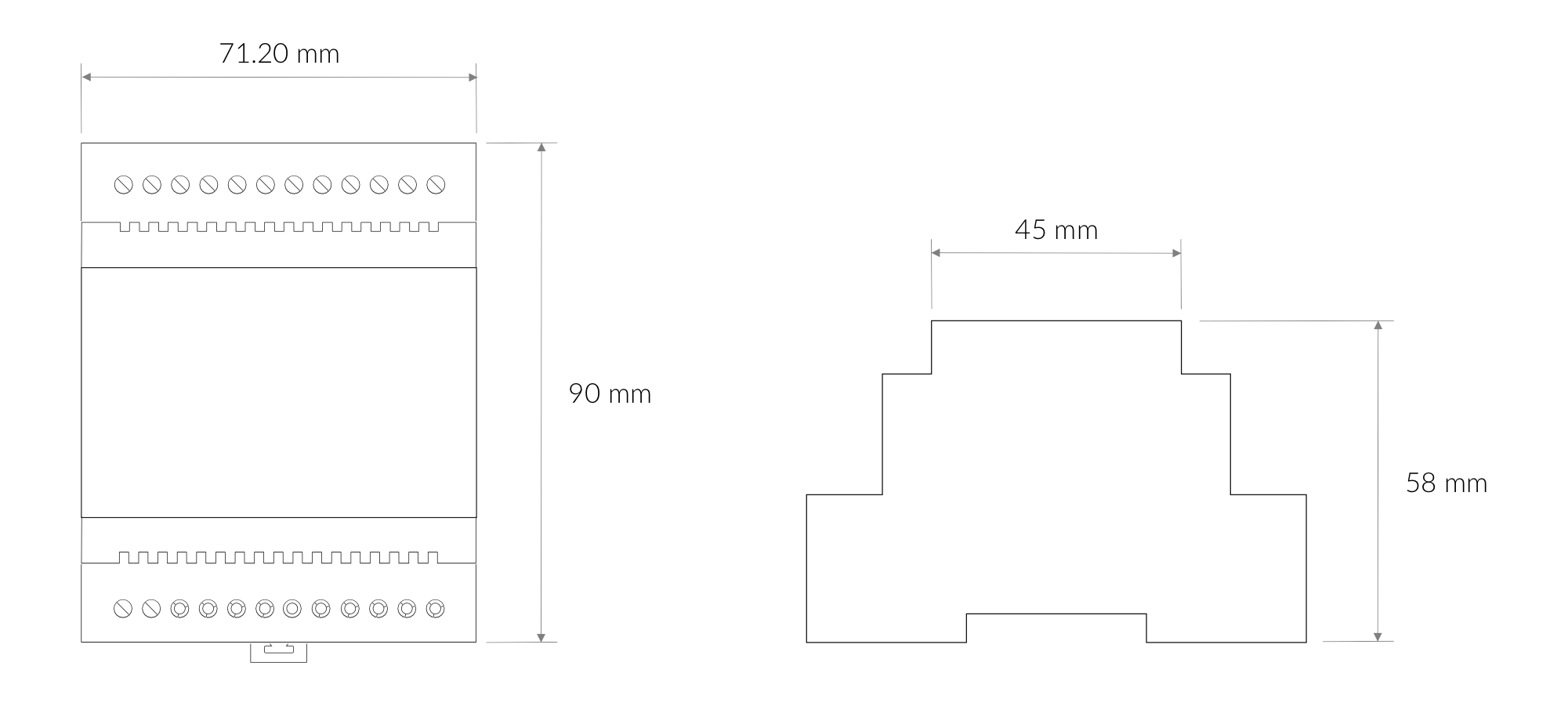
Figure 3. Dimensions of the device
Device
| Attribute | Description |
|---|---|
| Dimensions | Height: 90 mm Width: 71.20 mm (4-pole) Depth: 58 mm |
| Colour | Light Grey |
| Mounting method | 35 mm DIN rail standard |
| Enclosure material | Polycarbonate |
| Level of protection | IP20, UL94-VO |
| Weight | 127 g |
Operating Conditions
| Attribute | Description |
|---|---|
| Temperature | 0°C to 70°C |
| Humidity | 0 to 90% |
| Placement | Indoor use |
| Power supply | 6-30 V DC 5-21 V AC |
| Power consumption | Typical: 80 mA DC (12 V DC) Maximum: 180 mA DC (12 V DC) |
Measured Values
| Parameter | Measurement range | Accuracy |
|---|---|---|
| Current | 4-20 mA | - |
| Voltage | 0-10 V | - |
Controls and Indicators
LED Status Indicator
YO Analog communicates its current behaviour to the user by RGBW LED placed on top.
Diode statuses interpretation
| Behavior | Colour | Status |
|---|---|---|
| Single flash | Green | General: device is working correctly (power and memory). |
| Single flash | Red | General: device is working incorrectly (power and memory). LoRaWAN communication: failed to receive an acknowledgement from LoRaWAN Server within specified timeout. |
| Single flash | White | LoRaWAN communication: LoRaWAN frame sent / confirmation from LoRaWAN Server after receiving the frame. |
| Slow flashing | Blue | BLE communication: connection to the device via BLE (configuration). |
| Rapid flashing | Blue | LoRaWAN communication: connecting to LoRaWAN network. |
Buttons
The YO Analog features a reset button located on the PCB, labeled "Reset". To reboot the device, simply press the button briefly.
Installation
Package Contents
- Device.
- Warranty card.
Safety Precautions
Go to the Safety Precautions section to see important information on handling, disposal and maintenance.
Installation Guide
- Mount the device on a 35 mm DIN rail.
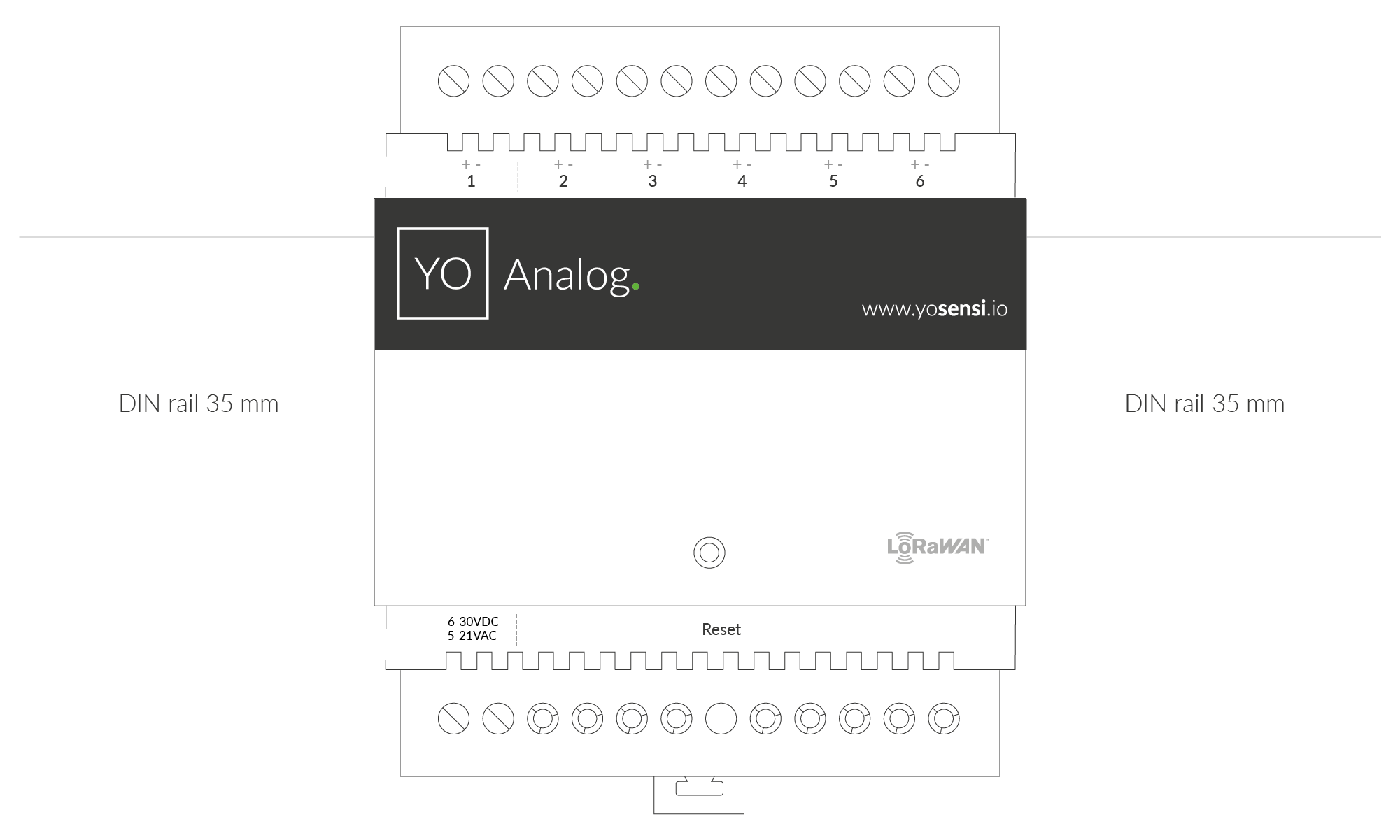
Figure 4. Device mounting instructions
Important! By default each input is configured as current. If you want to configure one or more inputs as voltage you have to do it before connecting sensors. The configuration is possible via BLE.
- Connect a 4-20 mA signal source and/or a 0-10 V voltage measuring cable to the individual inputs of the device according to the polarity shown on the enclosure label.
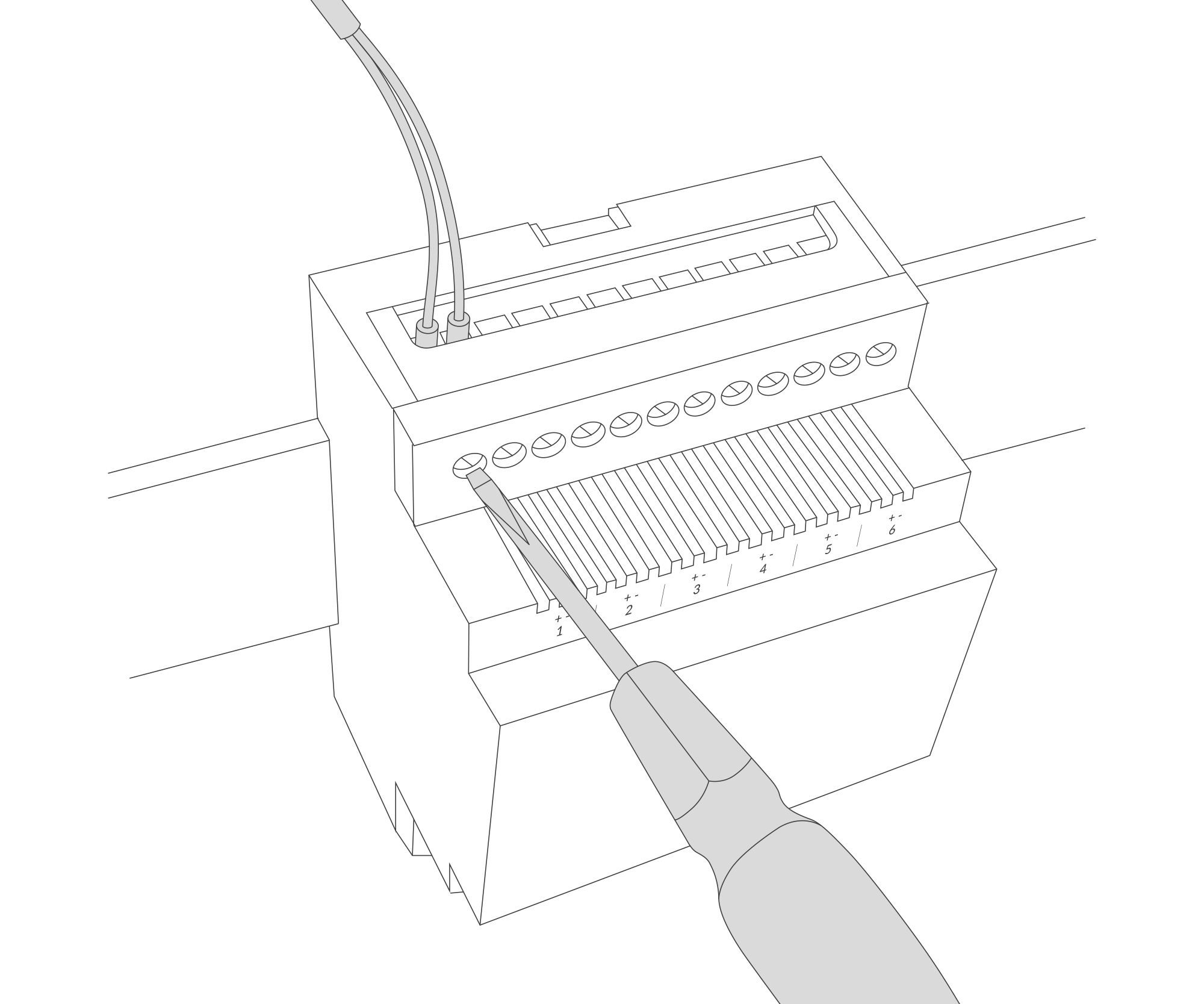
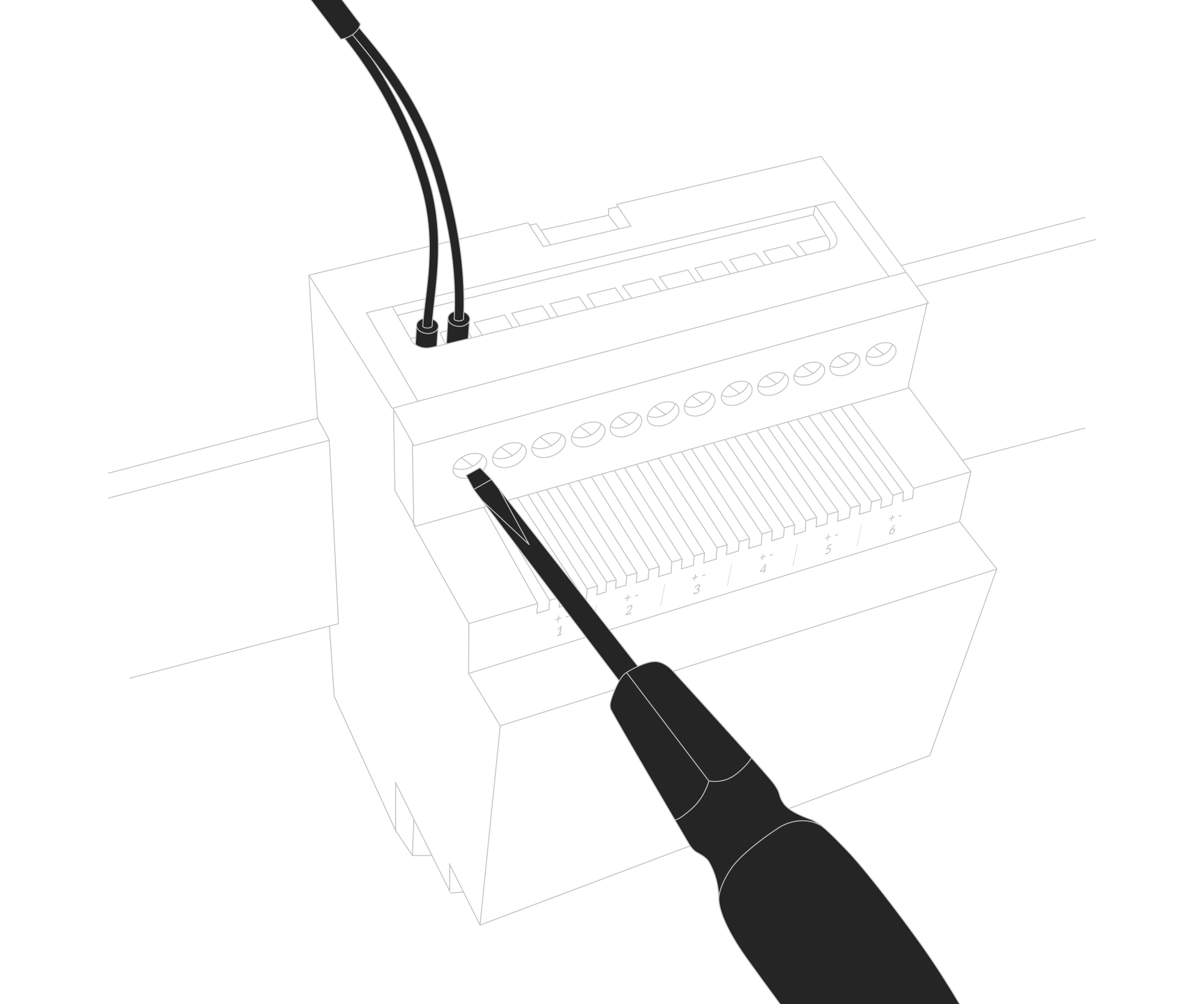
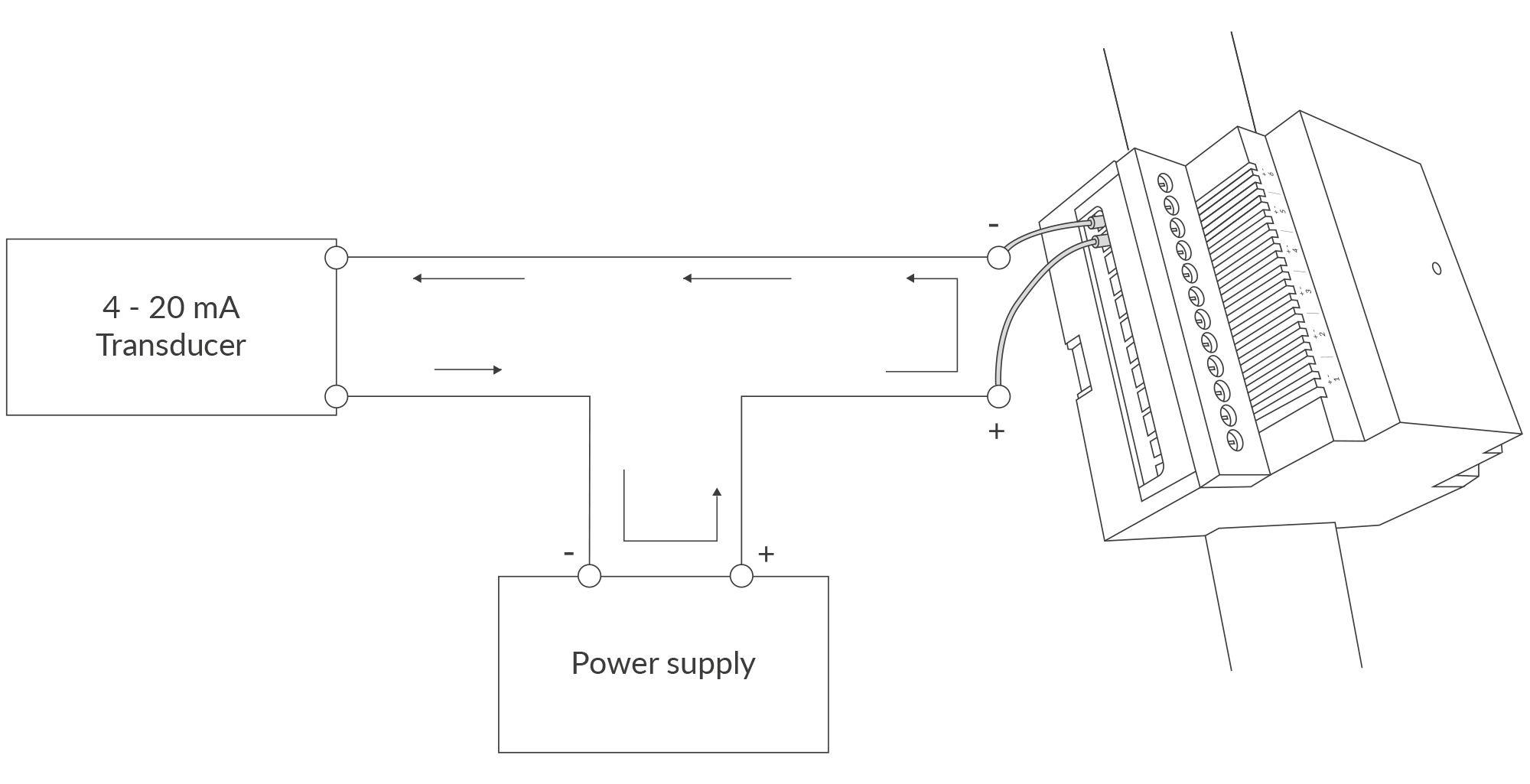
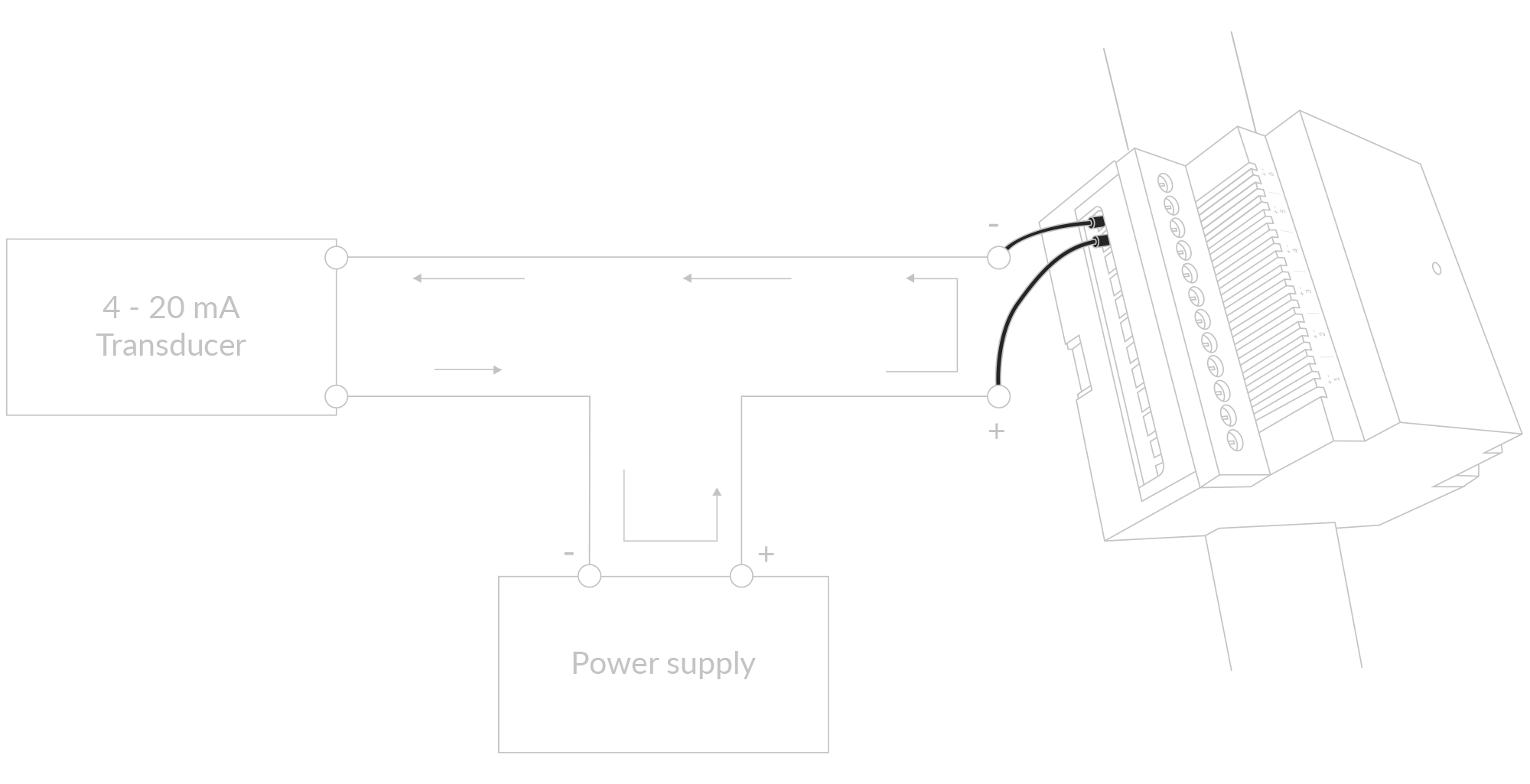
Figure 5. Connect the inputs to the individual channels of the device
- Screw the power supply wires to the device regardless of polarity (6-30 V DC, 5-21 V AC).
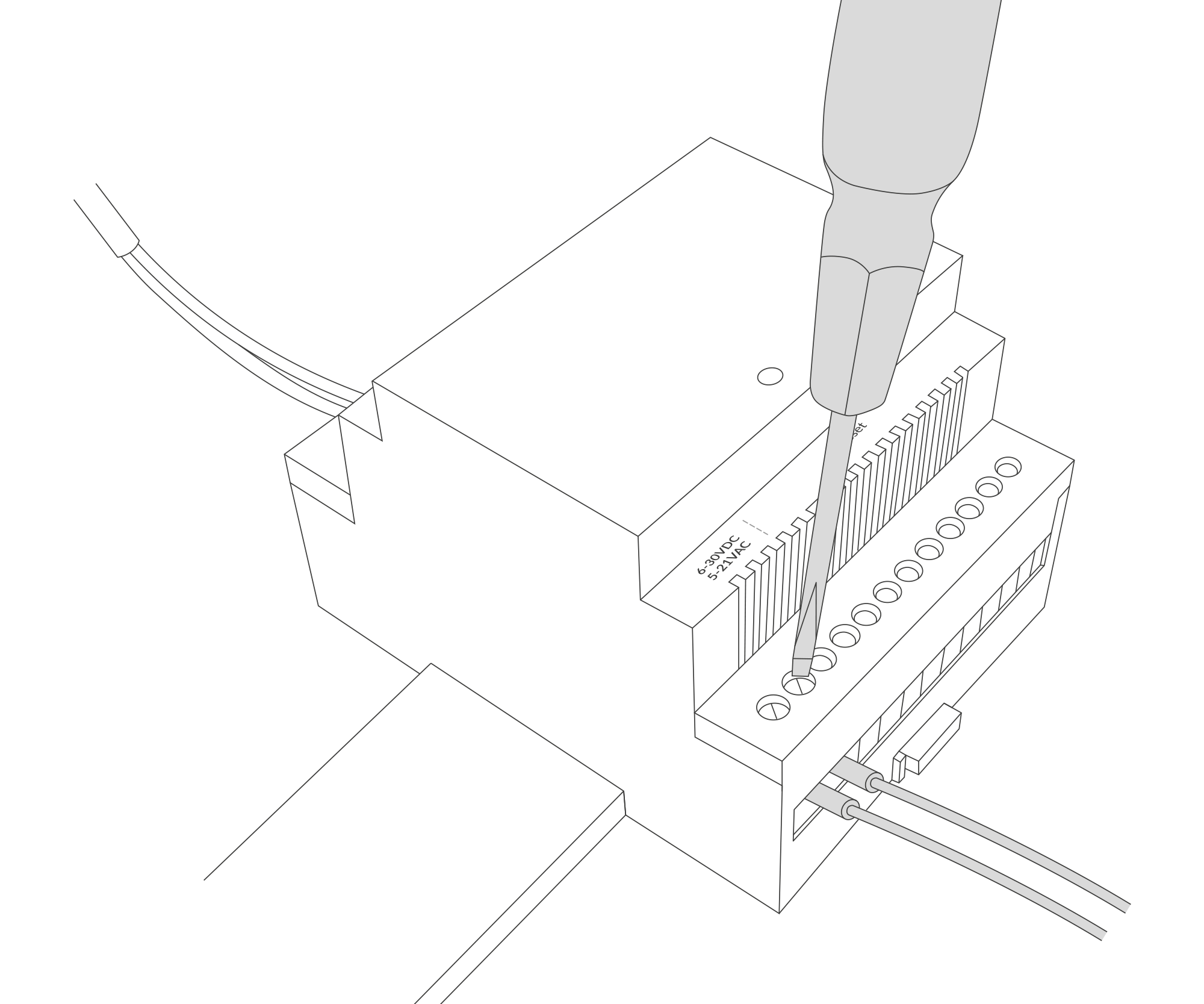
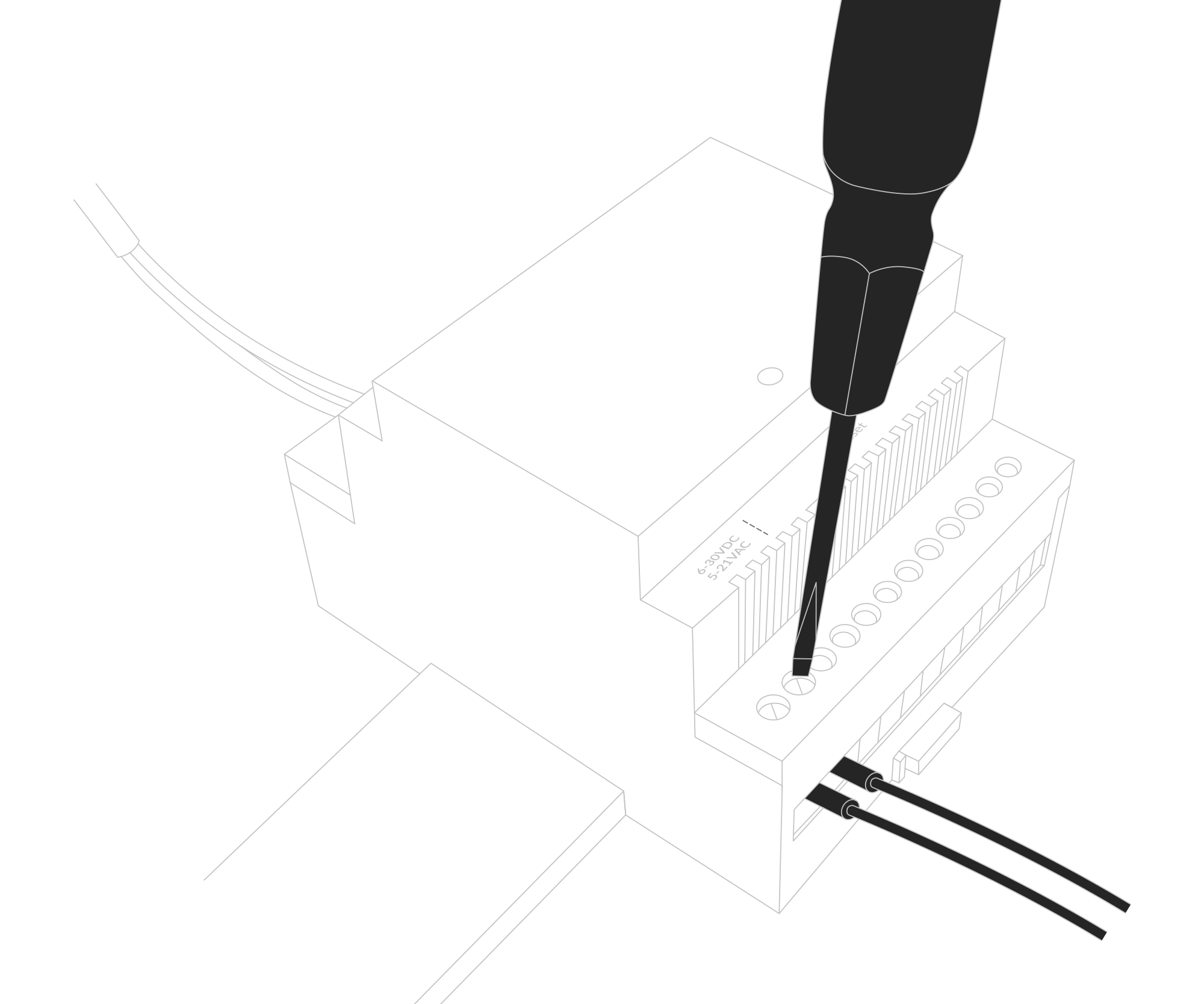
Figure 6. Instruction on how to fasten the current clamps around the wires
- After connecting the wires, diodes should behave as it is described on LED Status Indicator.
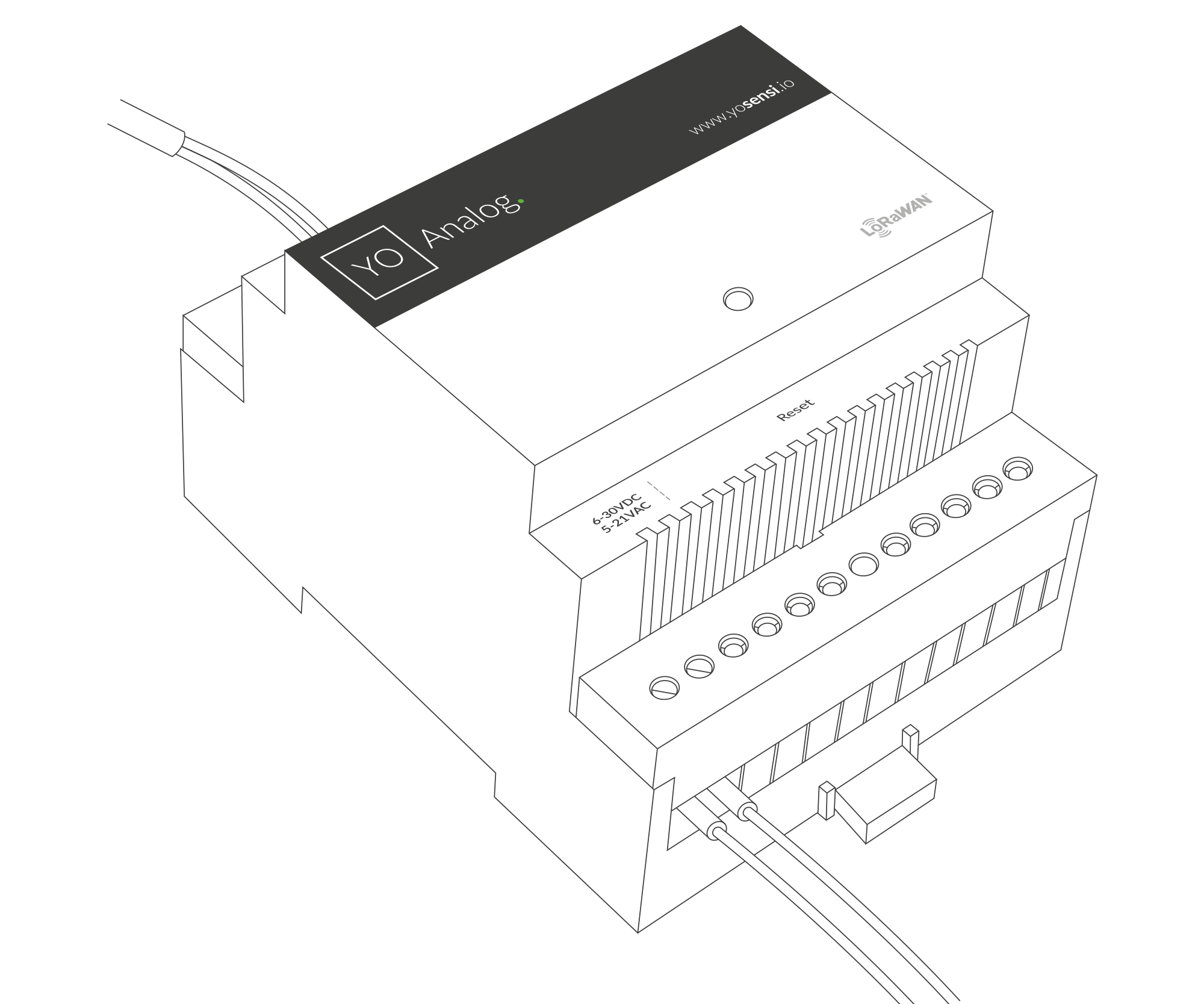
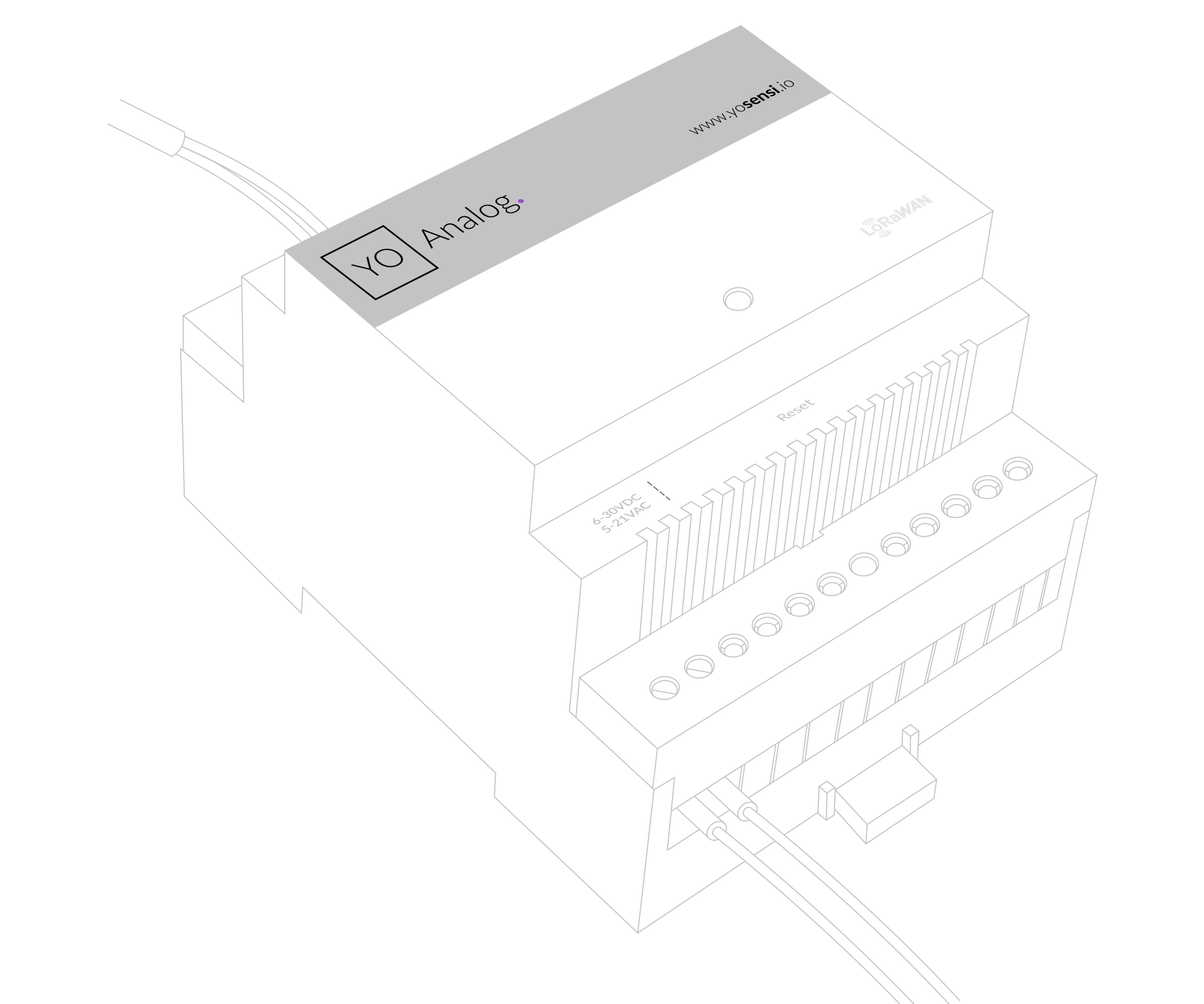
Figure 7. Final look of the device
Configuration
Configurable Parameters
A few parameters must be set before sending data to the gateway. The default firmware is configured in OTAA mode with predefined deveui, appkey (OTAA) and appskey, nwkskey (ABP).
Configuration of the device is stored in a JSON file divided into the following sections:
- info (generic, read only): information about the device,
- lorawan (generic): configuration data for LoRaWAN connection,
- ble (generic): Bluetooth settings,
- device (dynamic): individual configuration for a specific device (this section’s structure differs for each device),
Sample configuration file for the YO Analog device.
{
	"info": {
		"devmodel": "LNAN",
		"fwver": "3.6.2",
		"loraradio": "SX1261",
		"lorawanver": "1.0.2",
		"loraregion": "EU868",
		"blemacaddr": "0123456789ab"
	},
	"lorawan": {
		"subband": 1,
		"nwktype": "public",
		"acttype": "otaa",
		"otaa": {
			"deveui": "0123456789abcdef",
			"appeui": "fedcba9876543210",
			"appkey": "000102030405060708090a0b0c0d0e0f",
			"trials": 3
		},
		"abp": {
			"devaddr": "01234567",
			"nwkskey": "0123456789abcdef0123456789abcdef",
			"appskey": "000102030405060708090a0b0c0d0e0f"
		}
	},
	"ble": {
		"power": 0,
		"interval": 1600
	},
	"device": {
		"measinterval": 300,
		"measthreshold": 20,
		"ch1func": "0-20mA",
		"ch2func": "0-20mA",
		"ch3func": "0-20mA",
		"ch4func": "0-10V",
		"ch5func": "0-10V",
		"ch6func": "0-10V"
	}
}
OTAA & ABP
| OTAA | ABP |
|---|---|
| Device EUI | Device Address |
| Application EUI | Network Session Key |
| Application Key | Application Session Key |
| Number of Trials |
Generic Parameters
Click here to see the generic parameters for Yosensi devices.
Parameters
Device Parameters
| Name | Description | Possible Values | Default Value | Read/Write |
|---|---|---|---|---|
| measinterval | Measuring and sending interval LoRa [s] | 601-999999 | 300 | R/W |
| measthreshold | Measuring and sending threshold accuracy | 1-9999 | 20 | R/W |
| chxfunc | Number of channels with function of measurement current on voltage | 0-20 mA 0-10 V | 0-20 mA | R/W |
| ||||
Parameters description
- nwktype: used for setting the device in public or private network type.
- acttype: used for setting the device in ABP or OTAA mode.
- deveui, … , appskey: predefined addresses and keys, these parameters are generated using multiple IDs specific to the particular MCU and are unique for each device. They can be changed if needed.
- interval: determines the interval of sending broadcast packets, used to connect to every BLE receiver around the device.
- subband: used for setting the communication frequency sub-band in LoRaWAN.
- measinterval: measurement interval [s] between sending LoRa packets.
- measthreshold: measurement threshold for each channel. If current or voltage value between previous measurement and the next differs by a value of ‘meastreshold’, it queues this data for sending. Measurement difference is reported in subsequent LoRa packets along with measurement time.
- ch1func…ch6func: numbers of channels with measurement of current or voltage flow in the network connected to the device.
Outlier detection mechanism
The outlier detection mechanism uses the measthreshold parameter to assess the sensitivity range for data points. When all values fall within this range, only the first and last measurements are included in the payload. If out-of-range values are detected, additional data points are added to the payload. In cases where the number of data points exceeds the payload capacity, the system sends the remaining points in subsequent payloads at a reduced interval, overriding the configured measinterval value.
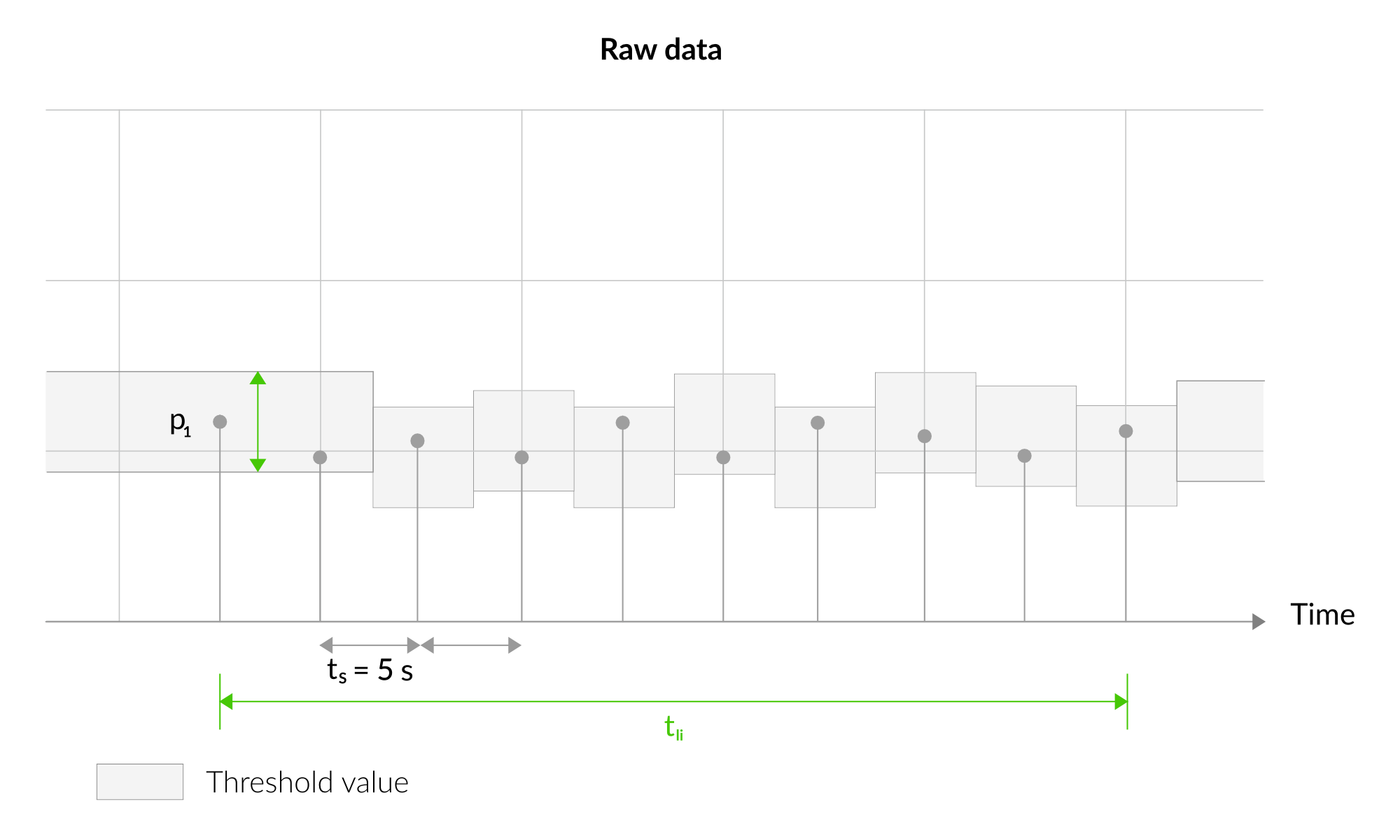
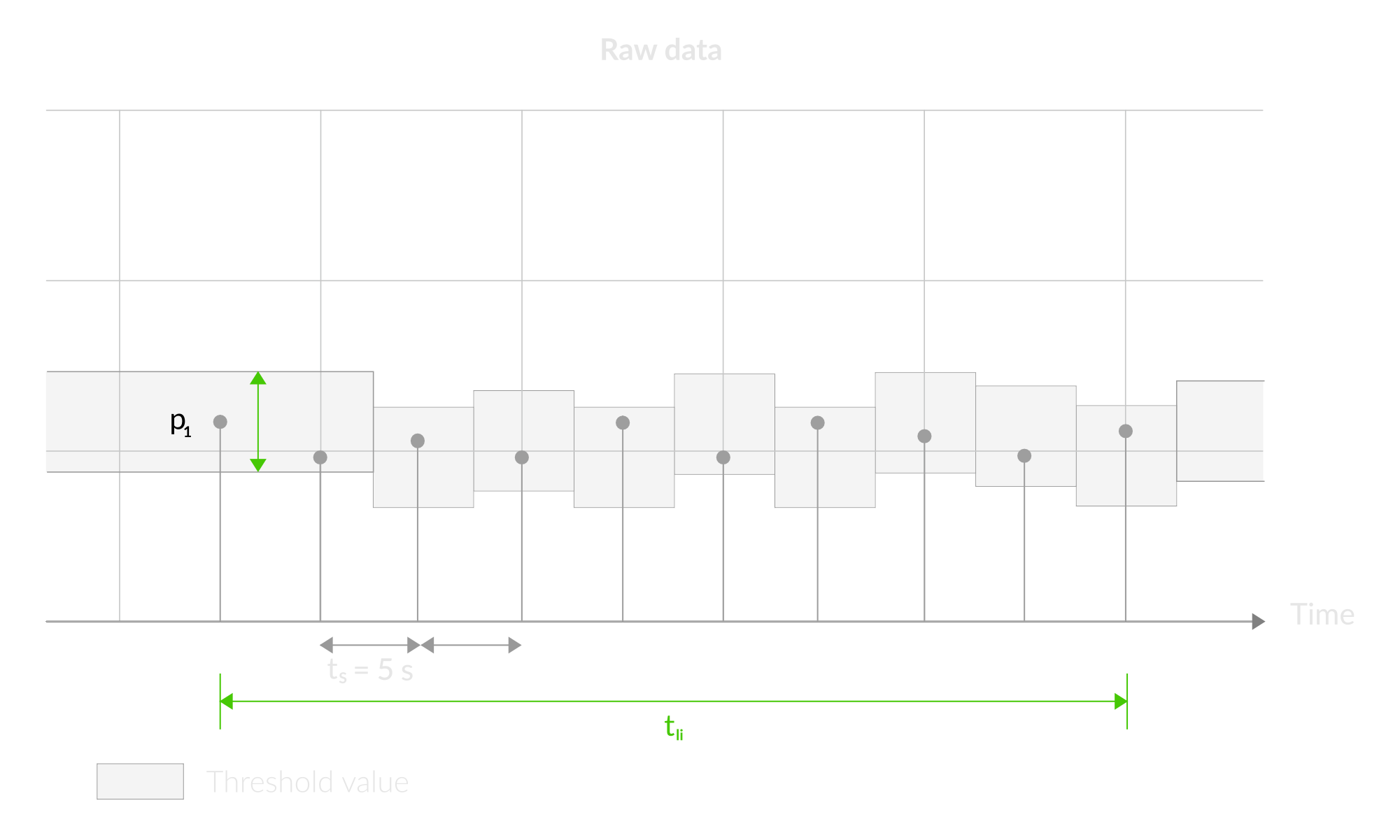
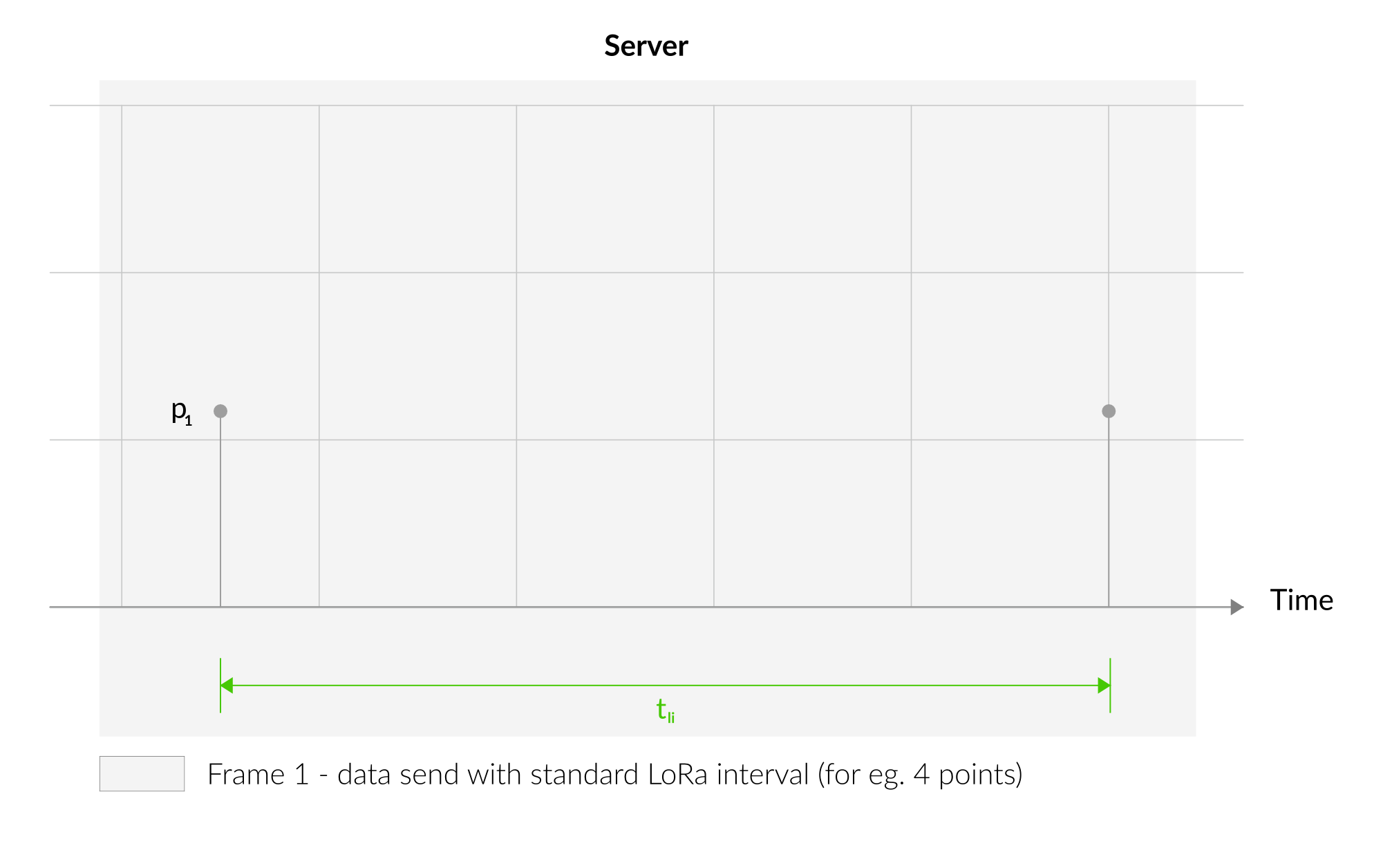
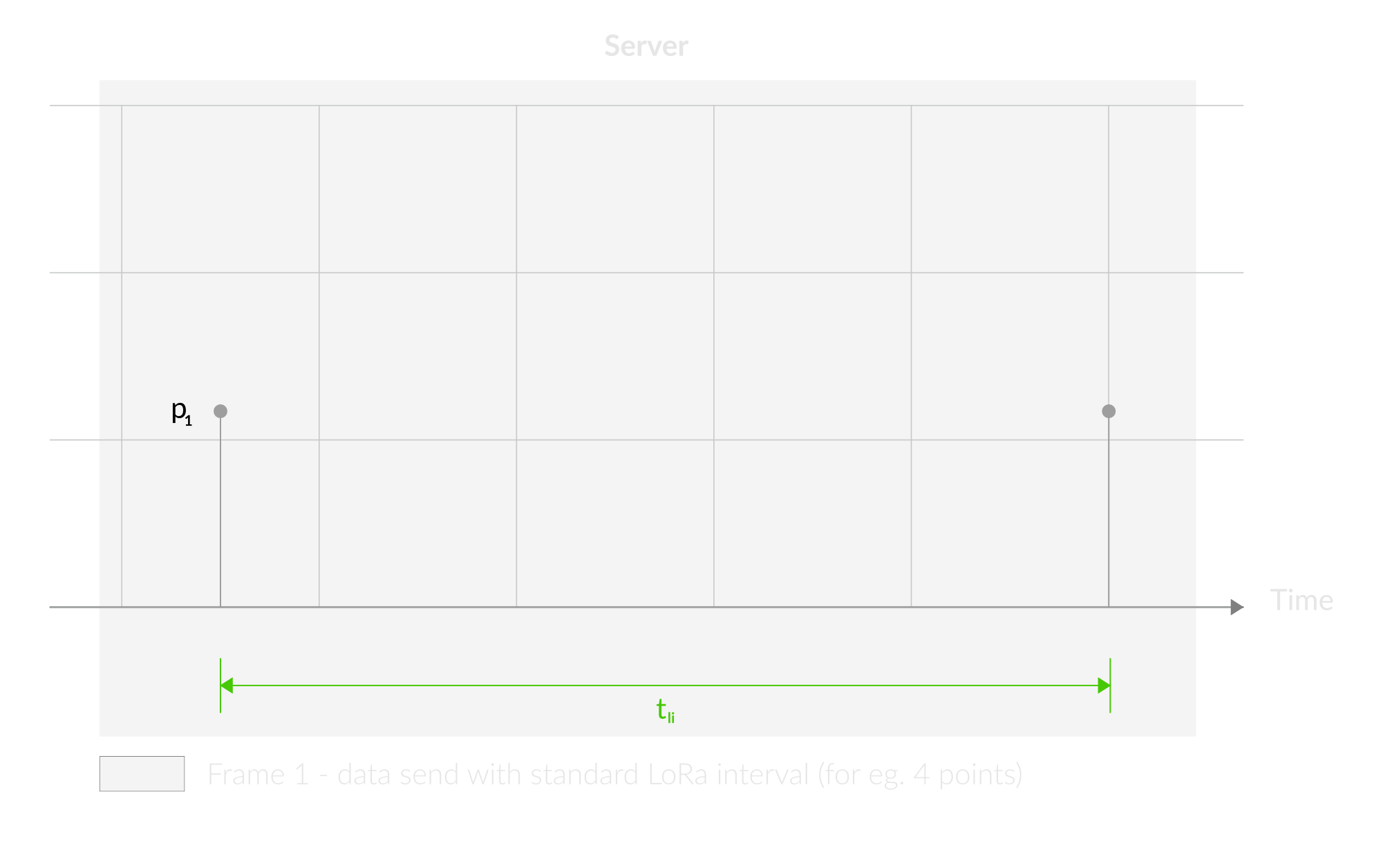
Figure 8. Outlier Detection Mechanism - 1
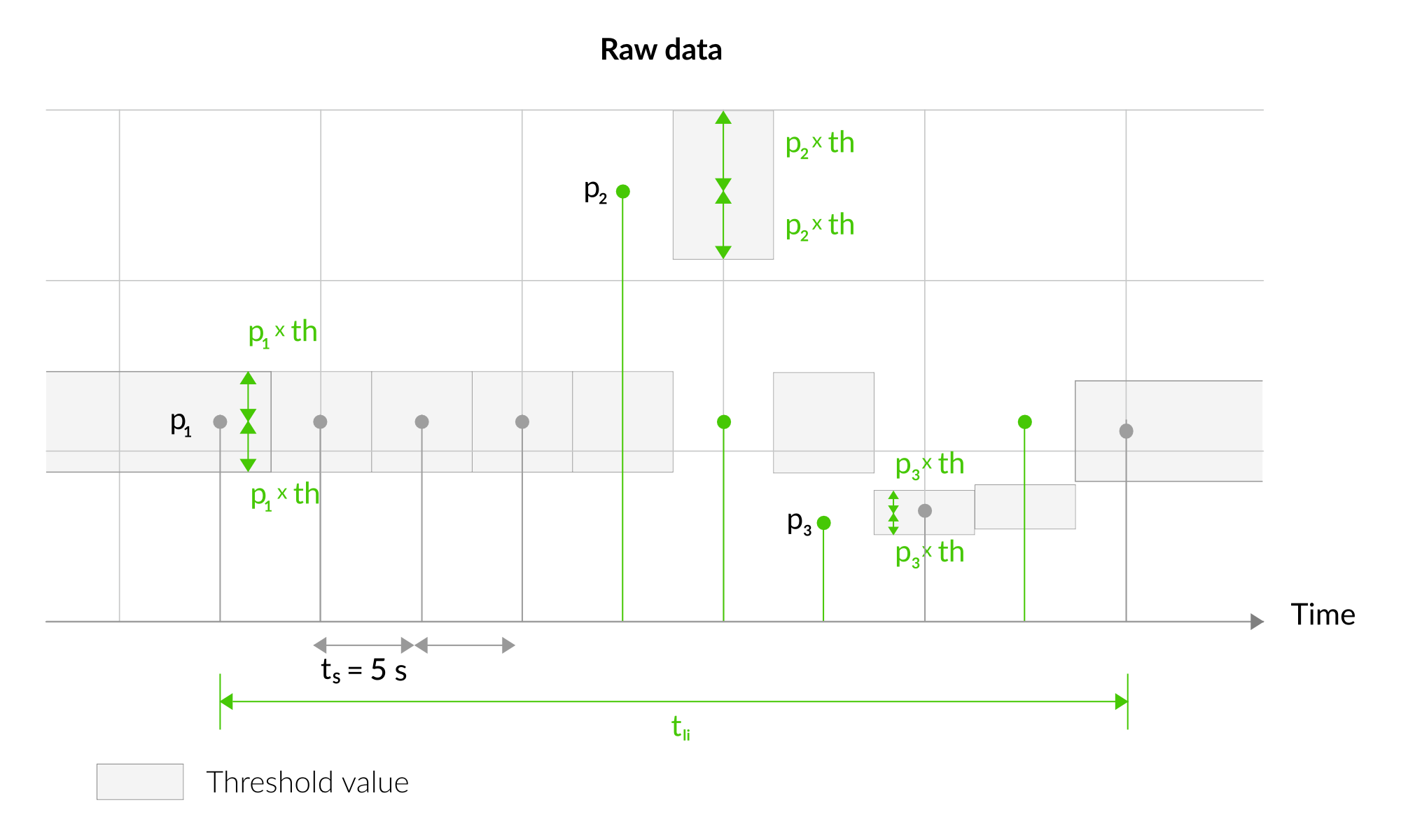
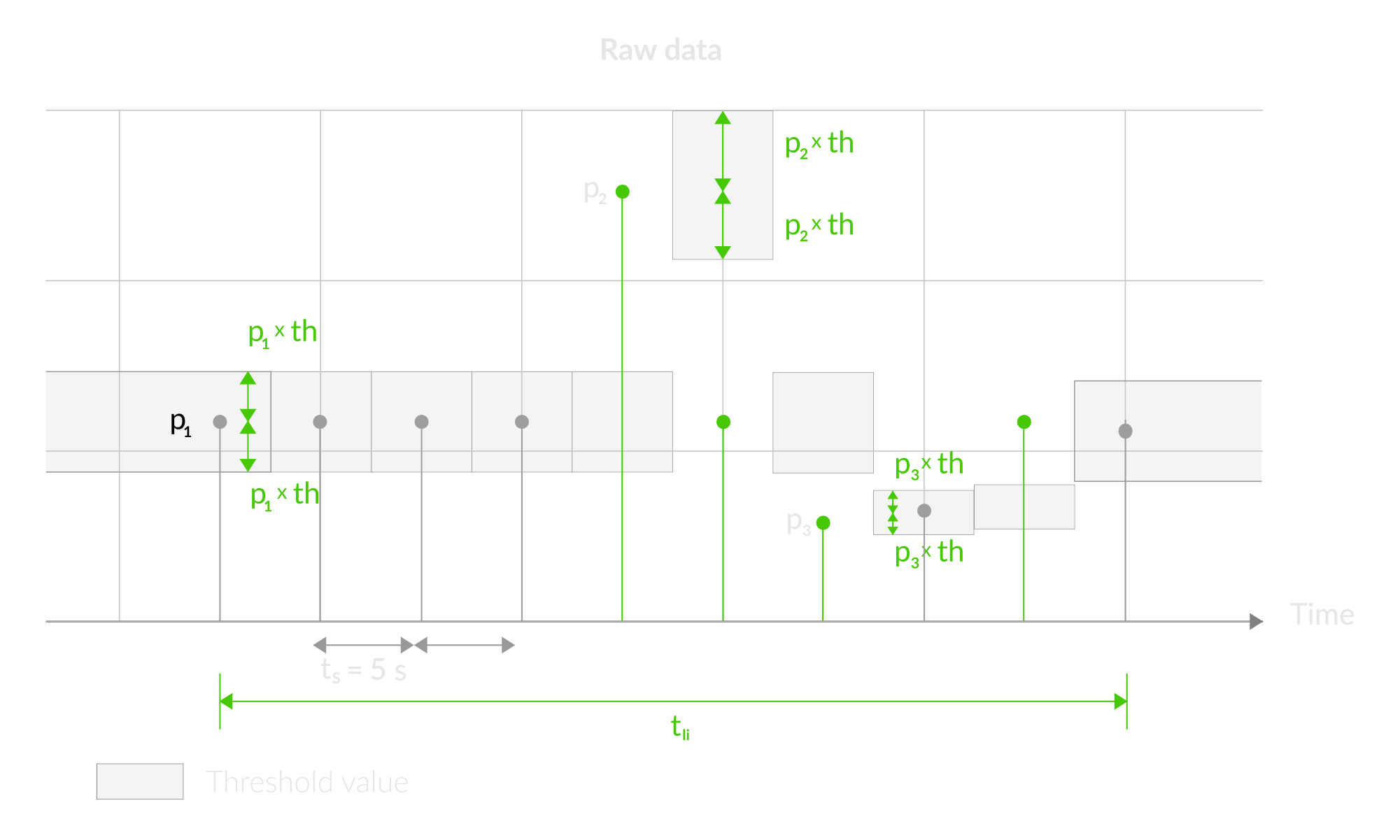
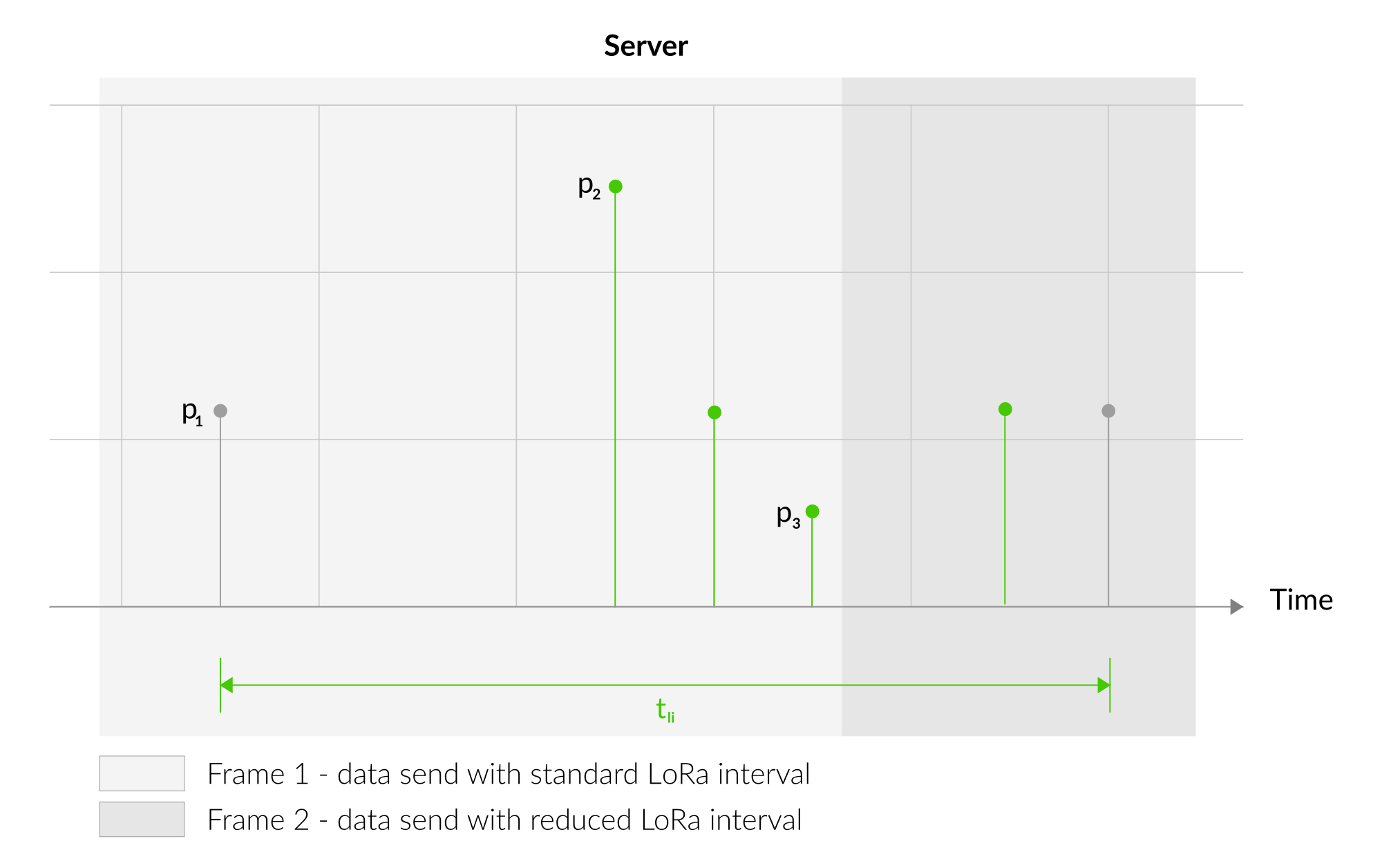
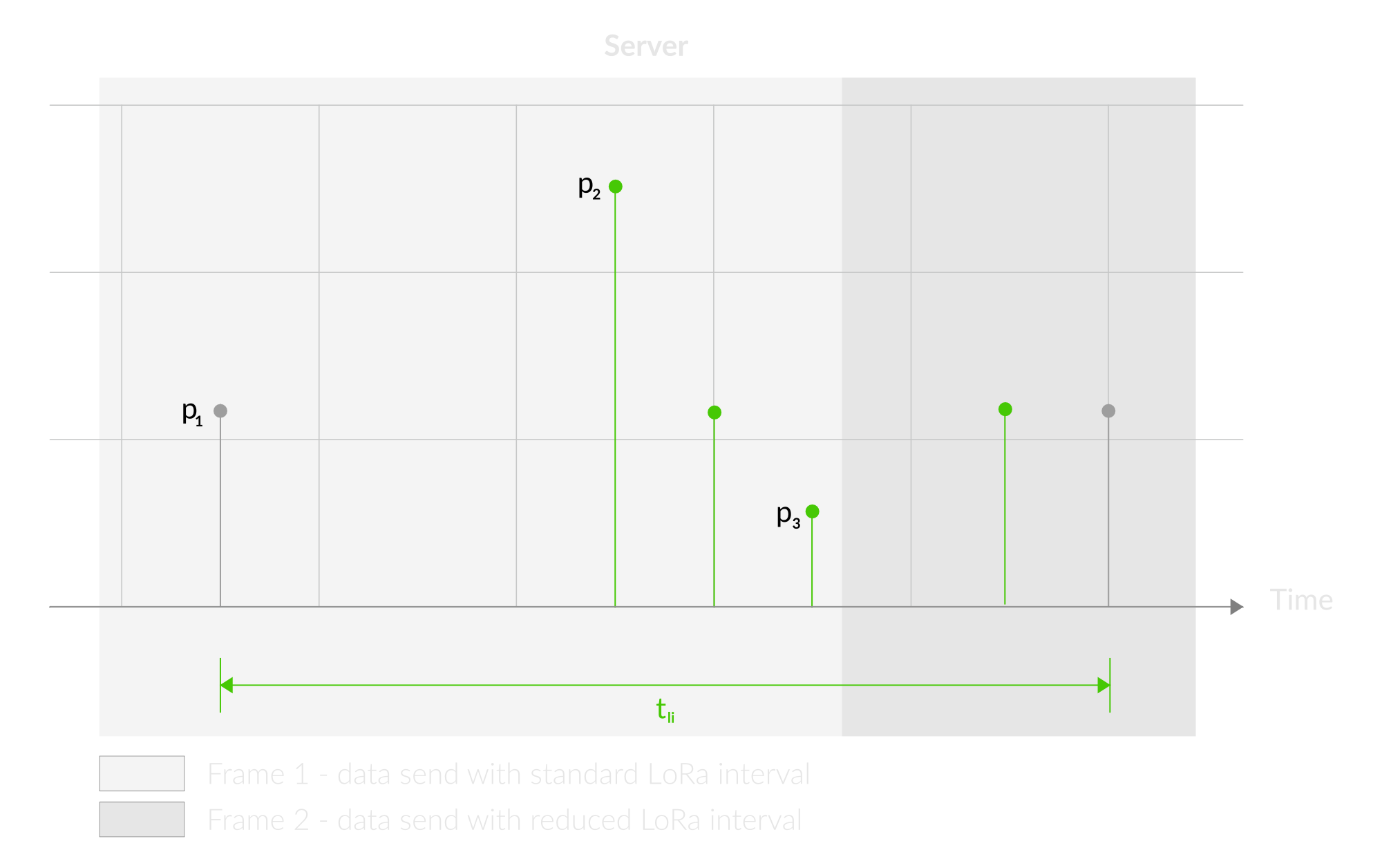
Figure 9. Outlier Detection Mechanism - 2
Downlink message
You can remotely adjust certain parameters by sending a downlink message through our platform. Simply navigate to the "COMMANDS" section for the selected device.
Update Measurement Interval
It is possible to change the measurement interval (measinterval) by using downlink. Information about changing the parameter will be sent from the server via the gateway.
Example of Downlink Message:
- Prefix:
0x03 - Measurement Index:
0x00 - Data (up to 4 bytes in hex):
0258
Sample Downlink: 0x03000258 - Sets a measurement interval of 600 seconds (10 minutes).
Click here to see how to connect a node using the Yosensi Management Platform.
See how to configure a node in Yosensi Management Platform
Check how to adopt and configure a node via the Yosensi App.
Take a look at the list of frequency plans used in Yosensi.
This datasheet describes the payload protocol developed by Yosensi for communicating with our devices.
Payload Decoder
If you want to connect to your own server, it is necessary to decode the specific payload for each device. To accomplish this, a payload decoder is required, which can be downloaded using the following link: Payload decoder. You can also use our integrated Payload Decoder here. Extended documentation of the protocol can be found in the Payload description on our website.
Compliance Statements
To view or download the Declaration of Conformity for YO Analog go here